Spot Price vs. Retail Price: Why You Pay a Premium on Gold and Silver
Why a coin at a dealer is priced above spot: what premiums and spreads are, why silver premiums run higher, and how to tell whether you are getting a fair deal.
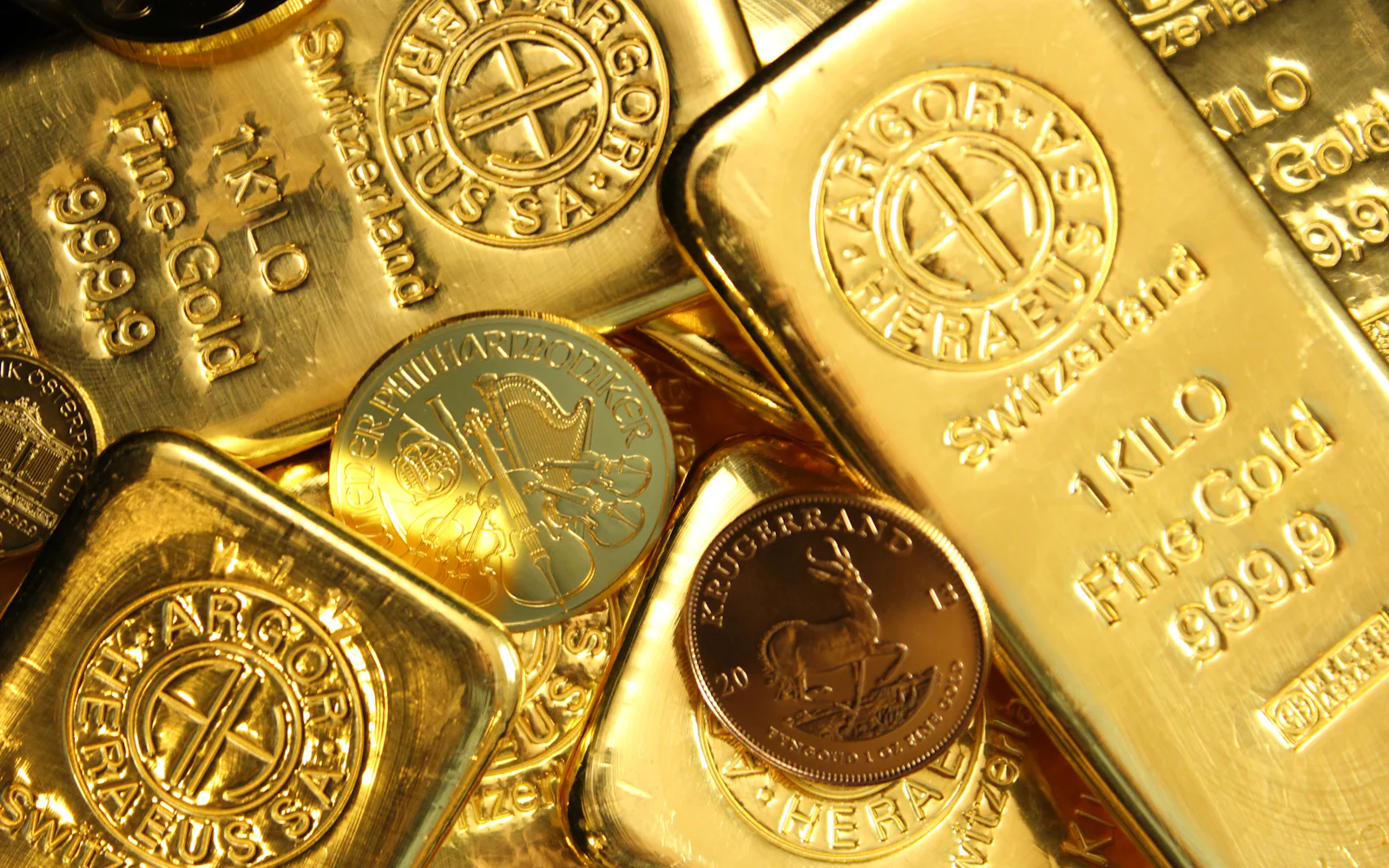
You check the gold price, then visit a dealer — and the coin costs noticeably more than the price you just saw. When you sell it back, the offer is a little lower. This is normal: you are seeing the difference between the spot price and the retail price.
What is the spot price?
The spot price is the price for metal traded for immediate delivery in the wholesale market — large bars traded between banks, refiners and institutions. It moves almost around the clock on weekdays, driven mainly by trading in London and on futures exchanges such as COMEX in New York.
You will also hear about the LBMA Gold Price, a benchmark set twice a day in London that many contracts reference. Apps and websites, including MetalFolio, show a continuously updated market price so you can follow the moves between those benchmarks.
What is a premium?
The premium is everything you pay above the value of the metal itself:
- Fabrication — refining, minting and packaging. Making a 1 g bar costs nearly as much as making a 1 oz bar, so small products carry much higher premiums per gram.
- Distribution — shipping, insurance and storage on the way to you.
- Dealer margin — the shop’s costs and profit.
- Supply and demand — during buying rushes, premiums can jump even when the spot price does not.
- Collectible value — rare or limited-edition coins can trade far above their metal content.
Why silver premiums look so high
Silver is worth far less per ounce than gold, but it costs about as much to mint, ship and store. Those fixed costs make up a much bigger share of the final price, so silver premiums are usually higher in percentage terms.
The spread: buying vs. selling
Dealers quote two prices: an ask (what you pay) and a bid (what they pay you). The gap between them is the spread. Popular products such as well-known bullion coins and standard bars usually have the tightest spreads because they are easy for the dealer to resell.
Taxes can change everything
Tax rules differ from country to country. In the European Union, for example, investment gold is exempt from VAT, while silver, platinum and palladium are generally subject to it — one reason many European buyers prefer gold. Always check the rules where you live.
How to judge a deal
Work out the premium as a percentage of the metal value:
Premium % = (price you pay − metal value) ÷ metal value × 100
Example with round numbers: a coin contains 1 troy ounce of gold, spot is $3,000, and the dealer asks $3,150. The premium is $150 ÷ $3,000 = 5%.
Then:
- Compare the premium for the same product across several dealers.
- Check the buy-back price too — the best deal combines a fair premium with a strong buy-back price.
- Prefer widely recognised bullion if you care about selling easily later.
- Remember that small units are convenient but cost more per gram.
Keep the spot price one tap away
MetalFolio shows live spot prices for gold, silver, platinum and palladium in 30+ currencies and units, so you can calculate any dealer’s premium on the spot — and set a price alert for the level you are waiting for.
This article is for information only and is not financial advice.